Early Home Entertainment
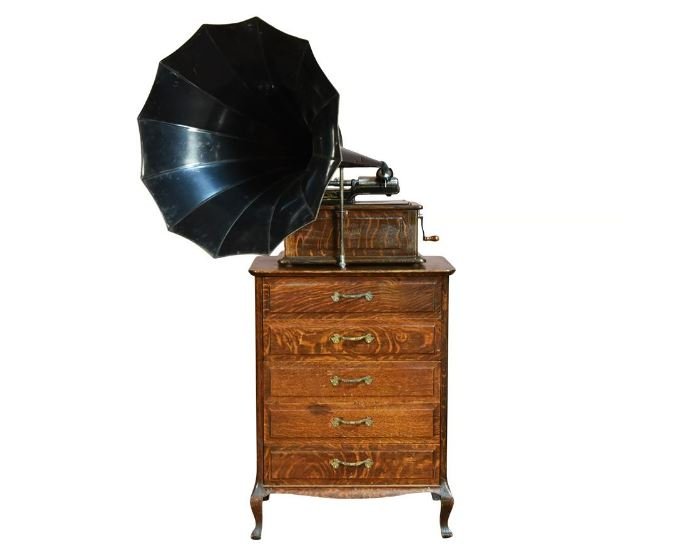
The antique oak cylinder record cabinet, designed for storing Edison phonograph cylinders, is a fascinating relic from the early days of recorded sound. These cabinets were not only functionally important but also among the first examples of home entertainment in the early 20th century.
Design and Functionality
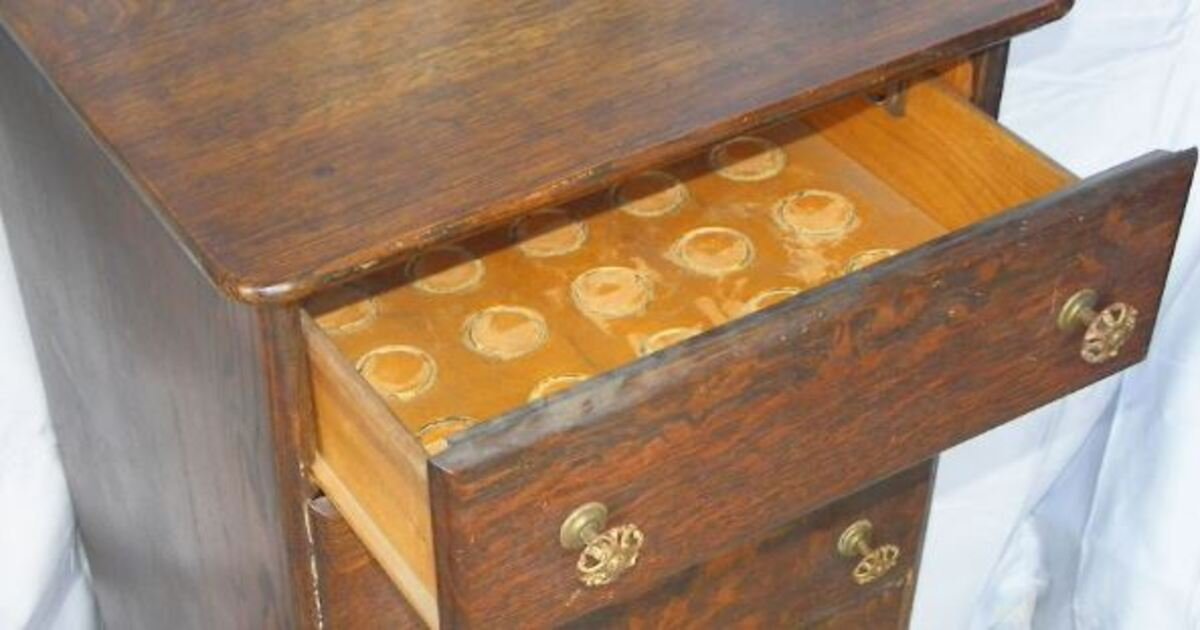
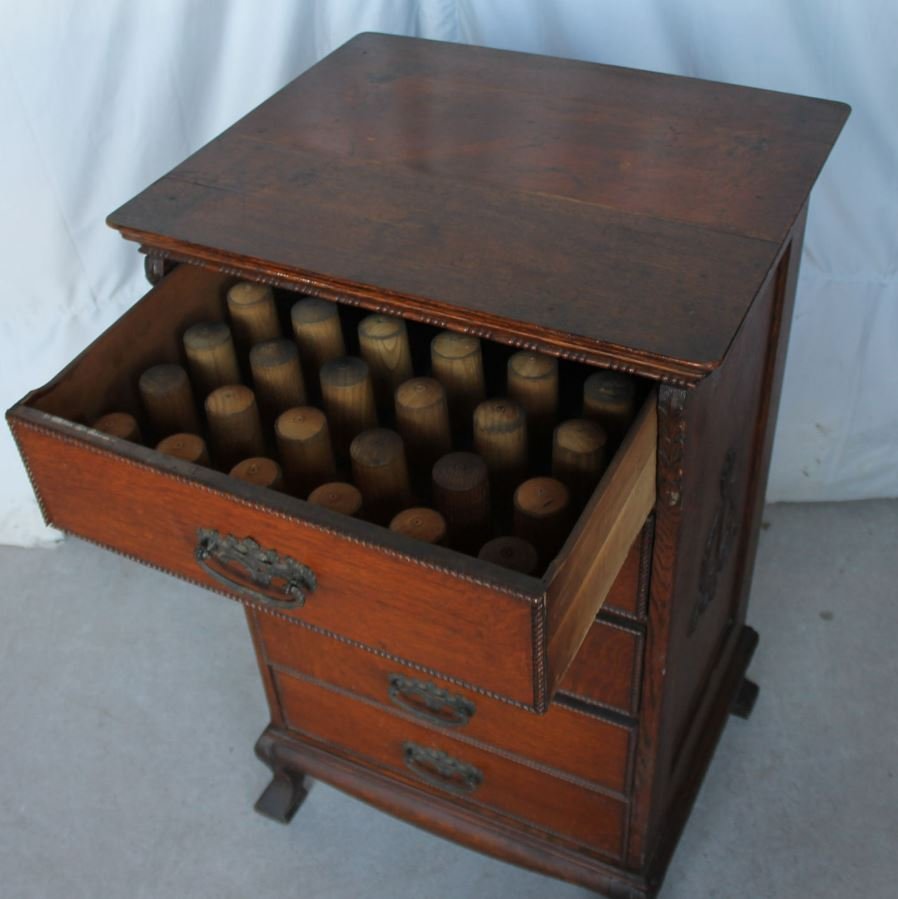
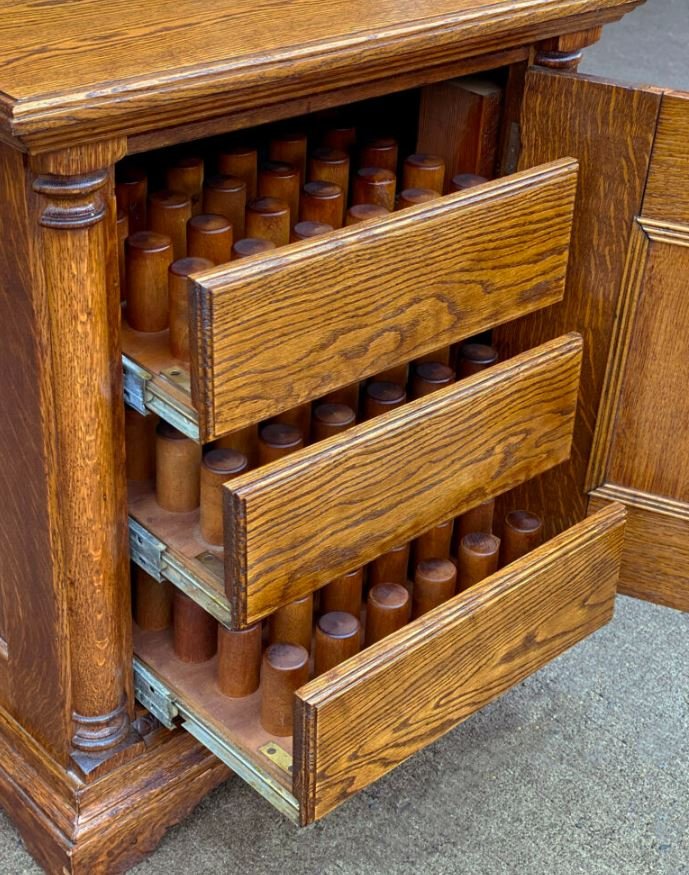
Made from fine oak for its durability and beauty, these cabinets housed the wax-coated cylindrical records used by early phonographs. The designs ranged from plain to ornate, reflecting Victorian and Edwardian styles. Inside, shelves or slots were arranged to make the records easily accessible and well-organized.
Protection and Aesthetic Appeal
The oak cylinder record cabinet perfectly combined form and function. It protected the fragile wax cylinders from dust and physical damage. The exterior, often a visual masterpiece, reflected the owner’s taste and social standing, making it both a functional and decorative piece.
Symbol of Technological Advancement
During Thomas Edison’s era, recorded sound revolutionized entertainment and communication. Owning a phonograph signified being up-to-date, while having an oak cabinet for the records showcased an interest in the latest technology. These cabinets were more than furniture; they held music and spoken word records that brought homes to life with sound.
Legacy and Cultural Impact
These cabinets and their contents became popular, laying the foundation for the modern music industry. They capture a time when listening to recorded sound at home transitioned from a curiosity to a common leisure activity. As historical documents, they reflect an era of technological breakthrough that shaped how we consume media today.
The antique oak cylinder record cabinet is not just a piece of furniture; it reflects the history of recorded sound and the technological advancements that revolutionized society. It allows us to admire the craftsmanship of past generations and appreciate the impact of these inventions on modern media consumption.