Nostalgic Breakfast Rituals
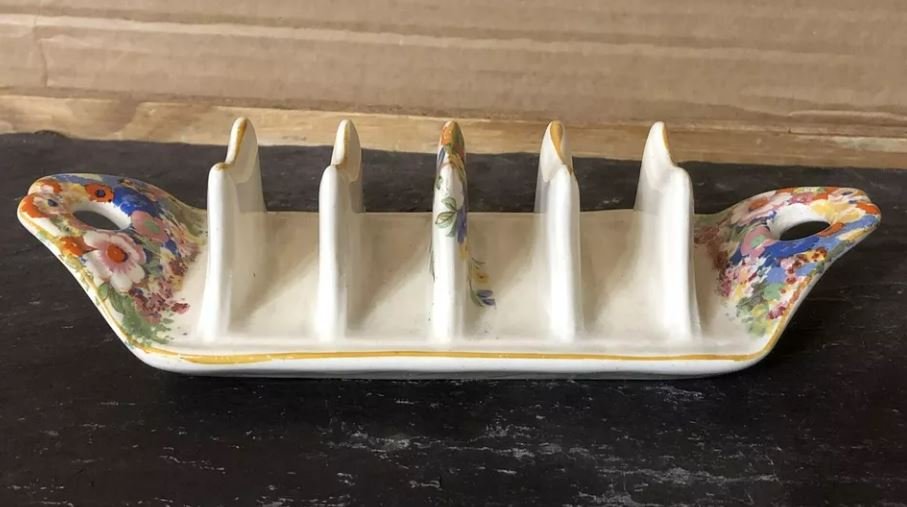
Remember those Sunday mornings at your grandparents’ house, where breakfast was a lavish affair, even down to the toast? Picture the porcelain toast rack gracing the center of the table, each slot cradling a crisp slice, steam gently rising. It wasn’t merely functional; it was a cherished part of the charm and ritual of those leisurely family gatherings.
Craftsmanship and Elegance
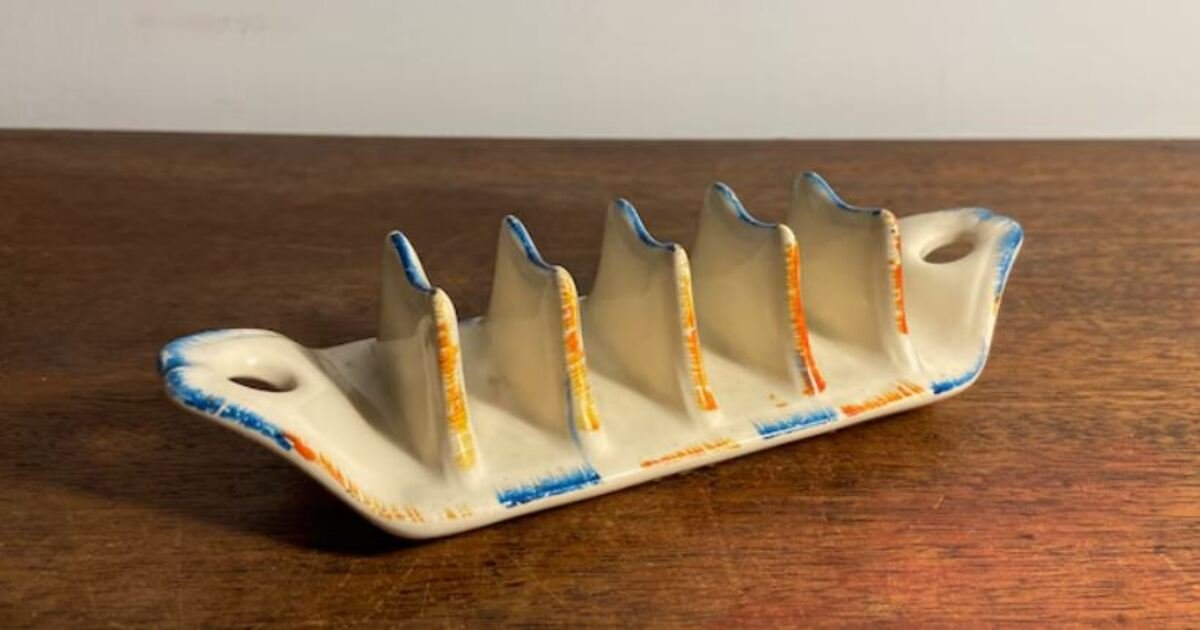
Crafted from the finest porcelain, these toast racks were a common sight on Victorian-era tables and beyond. Their design married aesthetics with functionality, often adorned with intricate hand-painted designs or gilded accents that shimmered in the light. Designed to keep toast upright, they allowed steam to escape, preventing sogginess, thus blending practicality with the period’s penchant for elaborate table settings.
Symbol of Status and Etiquette
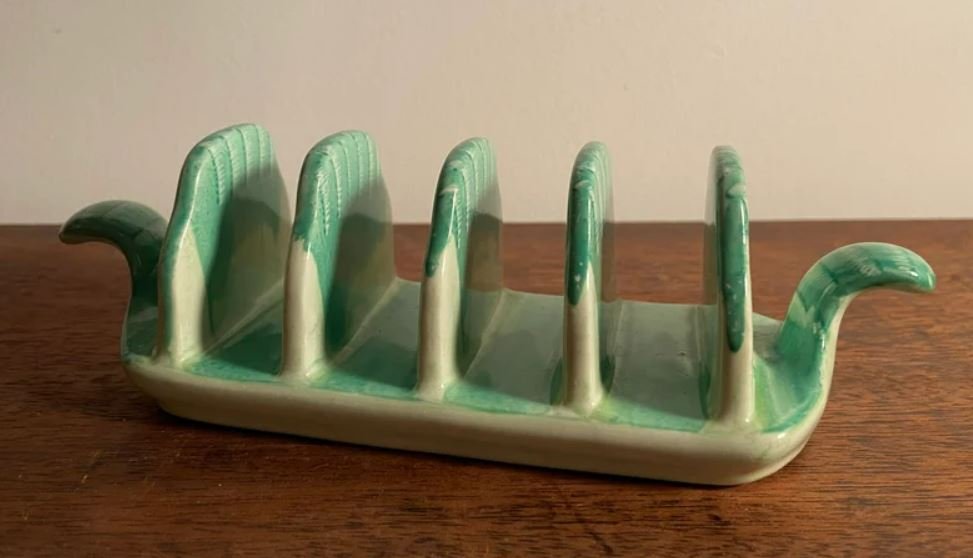
In the 19th century, a well-set table signaled social status, with each item, including the toast rack, serving as a marker of refinement. The introduction of such items coincided with the rise of the middle class, for whom dining rituals were a way to showcase social distinction. The porcelain toast rack became a symbol of the family’s attention to detail and propriety in dining etiquette.
Treasured Collectibles
Today, antique porcelain toast racks attract collectors and enthusiasts who value their historical significance and decorative appeal. Often found in antique shops, these pieces are cherished for their unique charm and as a reminder of a more refined era. Collectors take great care in preserving these racks, which can be delicate due to their age and the fragile nature of porcelain.
Versatile Repurposing
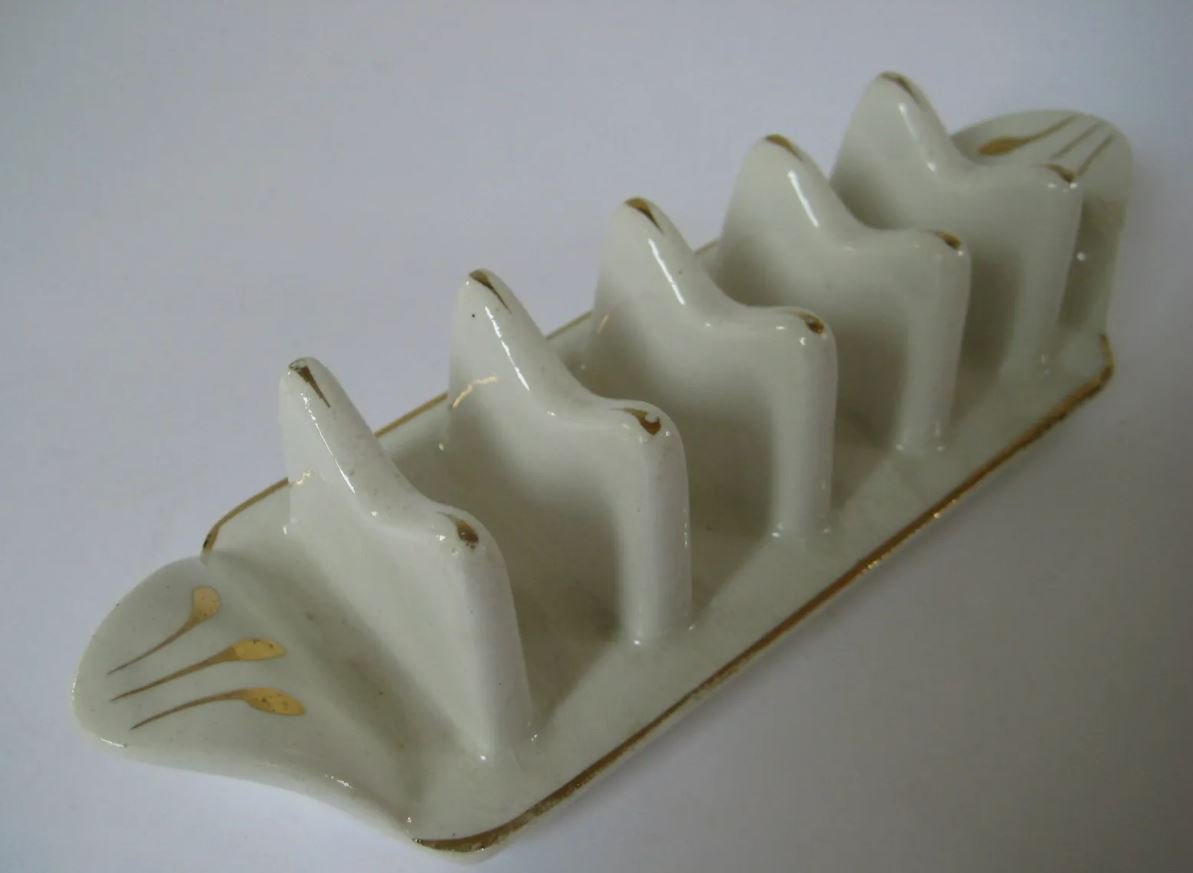
Beyond collecting, antique toast racks find new life in contemporary homes, serving not only as holders for toast but also as organizers for mail, bills, or even as holders for art supplies. Their adaptability continues to endear them to those who appreciate vintage aesthetics.
A Bridge between Past and Present
In essence, the antique porcelain toast rack serves as a tangible link to the art of dining and social etiquette of yesteryear while still offering charm and utility in modern lives. It reminds us of the attention to detail that characterized daily life in the past, encouraging us to pause and appreciate the beauty in the mundane.