Discovering Hidden Treasures
Unearthing Forgotten Heirlooms
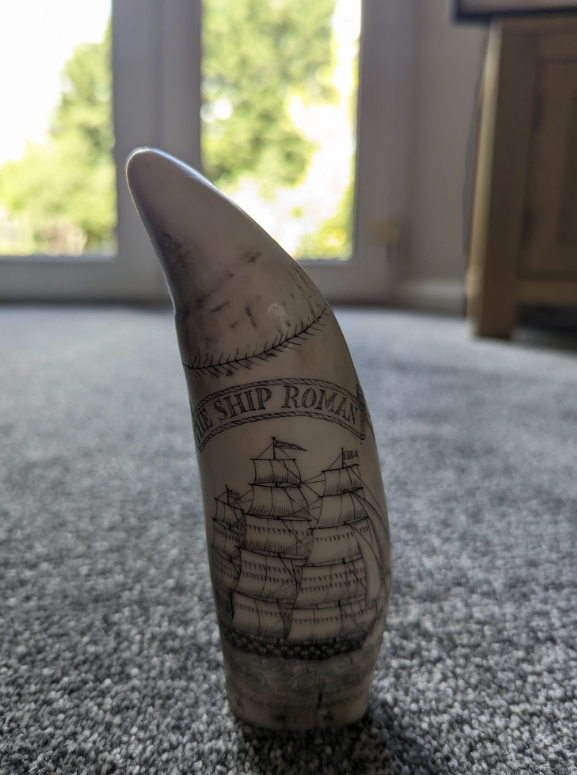
Remember those lazy Sunday afternoons spent rummaging through the attic, uncovering forgotten treasures from generations past? The musty scent of old trunks, the feel of dust-covered photo albums, and the thrill of discovering something special in your family’s history. One such find in my attic was an exquisite piece of scrimshaw, passed down since the 1950s. This intricately carved ivory tusk, depicting a majestic ship named “Roland,” instantly transported me to a bygone era of maritime adventure and artistry.
The Art of Scrimshaw
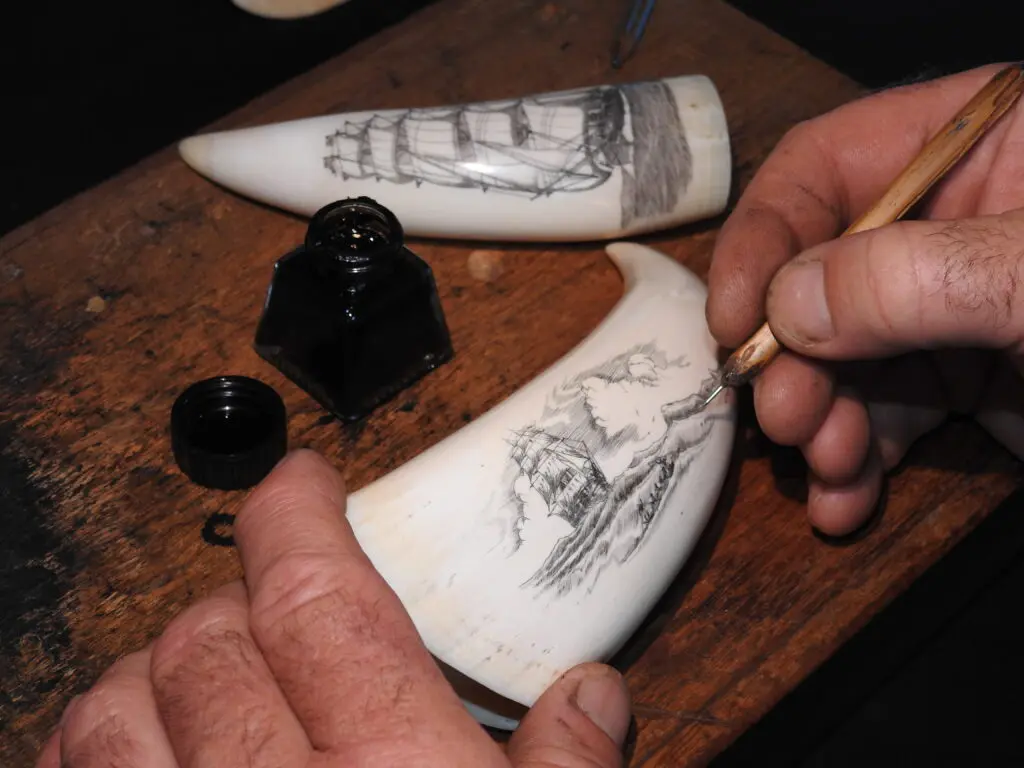
Scrimshaw, the art of engraving or carving on whale bones, teeth, or ivory, dates back to the early 19th century. Whalers, often on long voyages, turned to this craft to pass the time and create keepsakes. The piece I found, a 17 cm long, 375-gram tusk, showcases the delicate handiwork of a skilled sailor. The ship Roland, etched in fine detail, sails eternally across the polished ivory surface, a testament to the sailor’s patience and artistry.
Craftsmanship and Technique
Creating scrimshaw involves etching with sharp tools and applying ink or pigment to highlight the designs. These works of art often featured maritime scenes, portraits, or intricate patterns, each piece telling a unique story of its maker and the world they navigated.
A Glimpse into the Past
During its heyday, scrimshaw was more than just a pastime; it reflected the times and the sailor’s life at sea. These artifacts were exchanged as gifts or traded, becoming valuable keepsakes. The ship Roland, immortalized on the tusk in my attic, likely carried tales of daring voyages, distant lands, and the ever-present longing for home.
Cultural Significance
Scrimshaw pieces are significant cultural artifacts that offer insight into sailors’ daily lives, the maritime economy, and the adventurous spirit of the 19th century. They serve as tangible links to the past, embodying the intersection of art, history, and personal expression. The craftsmanship also highlights the ingenuity of sailors who, despite harsh conditions, found ways to create beauty and preserve memories.
A Deep Connection
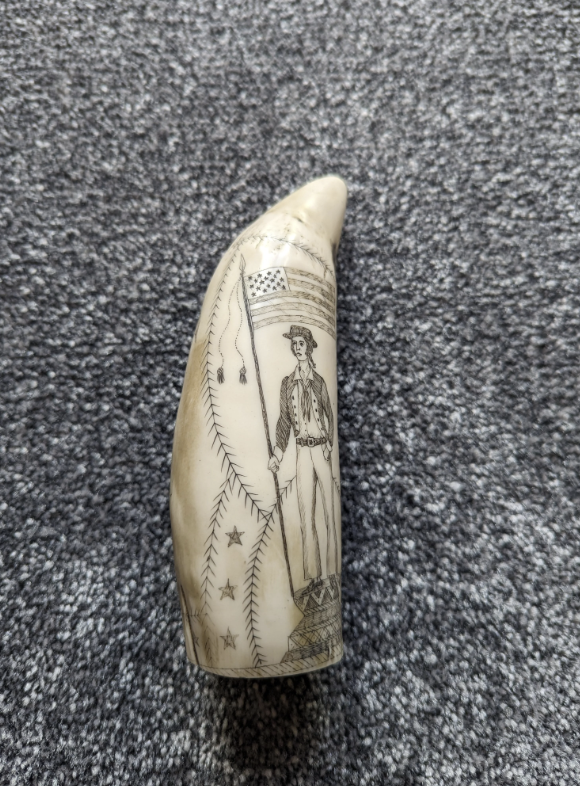
Holding the scrimshaw tusk in my hands, I felt a deep connection to the past, to the unknown sailor who once etched this ship with care and precision. The artistry and dedication involved in creating such a piece are awe-inspiring, reminding us of the enduring human spirit and our desire to leave a mark.
Bridging Generations
Sharing stories like these, and the heirlooms that accompany them, enriches our understanding of history and helps us appreciate the artistry and effort behind each piece. The scrimshaw tusk is more than just an object; it is a bridge between generations, a symbol of a time when the sea was both a livelihood and a canvas for creativity.