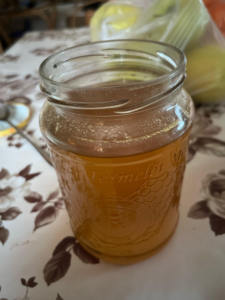
What Causes Honey to Crystallize?
Honey is a supersaturated sugar solution containing water, glucose, and fructose. Over time, glucose begins to separate from the water, forming crystals. As crystals develop, they attract more glucose, leading to further crystallization. While you can’t stop honey from crystallizing entirely, you can slow down the process.
How to Store Honey to Slow Crystallization
Honey crystallizes faster in cooler temperatures. Even in a beehive, low temperatures can trigger crystallization. To slow this process, store honey at room temperature or warmer. Avoid storing honey in a cold basement or an unheated room. Use glass jars instead of plastic, as glass better protects against moisture, which can speed up crystallization.
Why Do Some Honeys Crystallize Faster?
Unfiltered honey, which contains pollen and beeswax, crystallizes faster than filtered honey. These particles act as nucleation sites, encouraging crystal formation.
Types of Honey and Their Crystallization Rates
The type of nectar influences crystallization rates. Honeys with higher glucose levels, like clover, lavender, and dandelion honey, crystallize more quickly. In contrast, honey with higher fructose levels, such as acacia, sage, and tupelo honey, crystallizes more slowly. However, even slow-crystallizing honey will eventually form crystals if stored in a cold environment.
Can You Eat Crystallized Honey?
Absolutely! Crystallized honey is still edible and is easier to spread. Creamed honey, also known as spun honey, is crystallized with controlled methods to produce fine, smooth crystals. This gives it a creamy, spreadable texture without adding actual cream.
